
Commercial solar panels are a long-term investment. Whether they sit on an office roof, warehouse, school, or retail unit, they are expected to deliver reliable performance year after year. When output starts to dip, many businesses look first at the inverter or the grid connection. In reality, one of the most common and overlooked causes is simple dirt build-up.
Unlike domestic systems, commercial arrays are often larger, flatter, and exposed to higher levels of airborne pollution. This means cleaning plays an even bigger role in keeping performance where it should be.
So how often should commercial solar panels actually be cleaned?
Why Cleaning Matters for Commercial Systems
Solar panels only generate electricity when sunlight reaches the cells. Anything that blocks that light reduces output.
Common issues include:
- Dust and airborne pollution from roads and industrial areas
- Bird droppings from large roof perches
- Pollen and organic debris from nearby trees
- Moss and algae growth on flatter roofs
- Water spotting and residue left after rainfall
There Is No One-Size-Fits-All Answer
There is no single cleaning schedule that works for every commercial site. A fixed annual clean may be perfectly adequate for one building and completely insufficient for another.
The right frequency depends on:
- Location of the building
- Roof pitch and panel angle
- Proximity to roads, trees, or industrial activity
- Whether performance is being actively monitored
Understanding these factors allows cleaning to be planned properly, protecting output without unnecessary visits.
Typical Cleaning Frequencies for Commercial Solar Panels
While every site is different, some general patterns are consistent across most commercial installations.
An annual clean can work well for low pollution areas, steeper roofs where rain helps wash panels, and sites with minimal bird activity. It is often best carried out in spring or early summer to maximise generation during longer daylight hours.
Many warehouses, offices, and schools benefit from cleaning twice per year. Panels installed at lower angles or near trees tend to show visible build-up within months. A spring and autumn clean helps prepare systems for peak summer production and prevents heavy soiling going into winter.
More frequent cleaning is usually needed on industrial estates, near busy roads or rail lines, or on large flat roof arrays. Sites with heavy bird activity or food and agricultural operations often fall into this category. In these environments, tailored schedules are often the most cost-effective option once lost generation is considered.
Why Rain Does Not Solve the Problem
A common assumption is that rain keeps panels fully clean. In practice, rain rarely removes greasy pollution or bird mess. As water dries, it can leave mineral residue behind and spread dirt evenly across the surface. In shaded or damp areas, it can also encourage algae growth.
Panels that look clean from ground level can still have a thin layer of contamination that reduces efficiency.
The Risks of Infrequent or Poor Cleaning
Leaving commercial panels uncleaned for long periods can lead to more than reduced output. Over time, contamination can cause permanent staining, uneven soiling across the array, and heat build-up in shaded cells. In some cases, it can shorten the lifespan of the system or create warranty issues if maintenance requirements are not met.
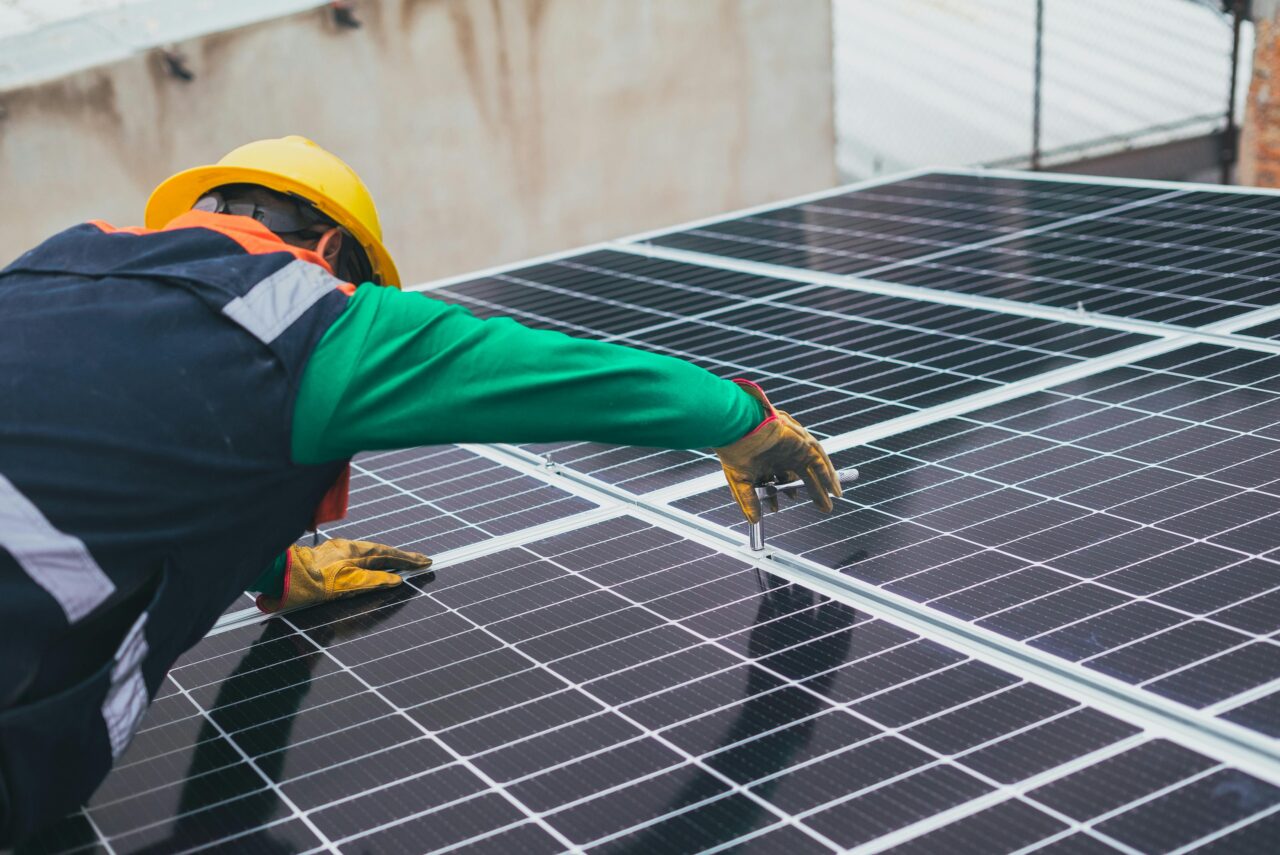
DIY or unqualified cleaning also carries risks, particularly on large or flat commercial roofs where access and safety need careful planning.
Why Professional Cleaning Is Essential for Commercial Sites
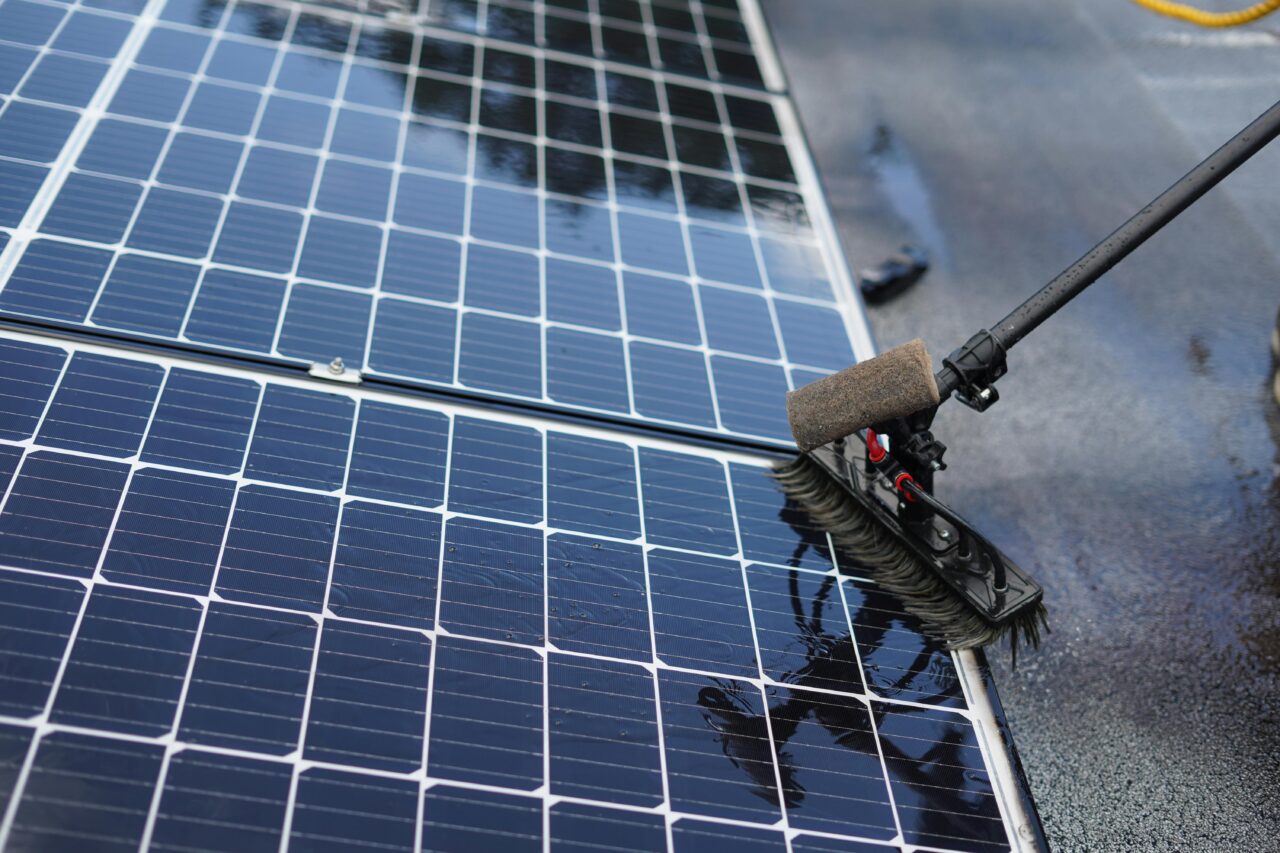
Professional cleaning uses purified water that leaves no residue, soft brush systems that protect panel surfaces, and safe working practices for height and roof access. It is carried out with minimal disruption to daily operations and can include documentation where required for facilities teams or insurers.
Pressure washing and harsh chemicals should never be used, as they can damage panels and invalidate warranties.
Cleaning as Part of Planned Maintenance
For most businesses, solar panel cleaning works best as part of a planned maintenance programme rather than a reactive task.
Regular cleaning helps keep output consistent, protects the system long-term, makes performance easier to track, and avoids sudden drops in generation. It also allows issues such as shading, damage, or drainage problems to be identified early.
Keeping Commercial Solar Performing at Its Best
There is no single answer to how often commercial solar panels should be cleaned, but the principle is simple. The dirtier the environment and the flatter the panels, the more frequent cleaning is needed.
If a commercial solar system is not delivering the output expected, reviewing the cleaning schedule is often the simplest and most effective place to start.